Alabaster DePlume shares new single “Glass” ahead of RSD exclusive
TRACKLIST
Bringing Up The Nakba
I Play A Role In It And I Know
It’s Only Now Once (Elbit Systems Windowpane)
Glass
What Did The Child Say / Facing Reality
CREDITS
Recorded at Figure 8 Recording, Brooklyn.
Produced by Alabaster DePlume in Total Refreshment Centre, London.
Alabaster DePlume – saxophones, sampler, synths, guitars
Shahzad Ismaily – bass
Tcheser Holmes – drums
Engineered by Tyler Hicks.
Mixed by Dave Vettraino.
Mastered by David Allen.
Samples by Mai Mai Mai, Marta in Brooklyn and Aladdien in Bethlehem.
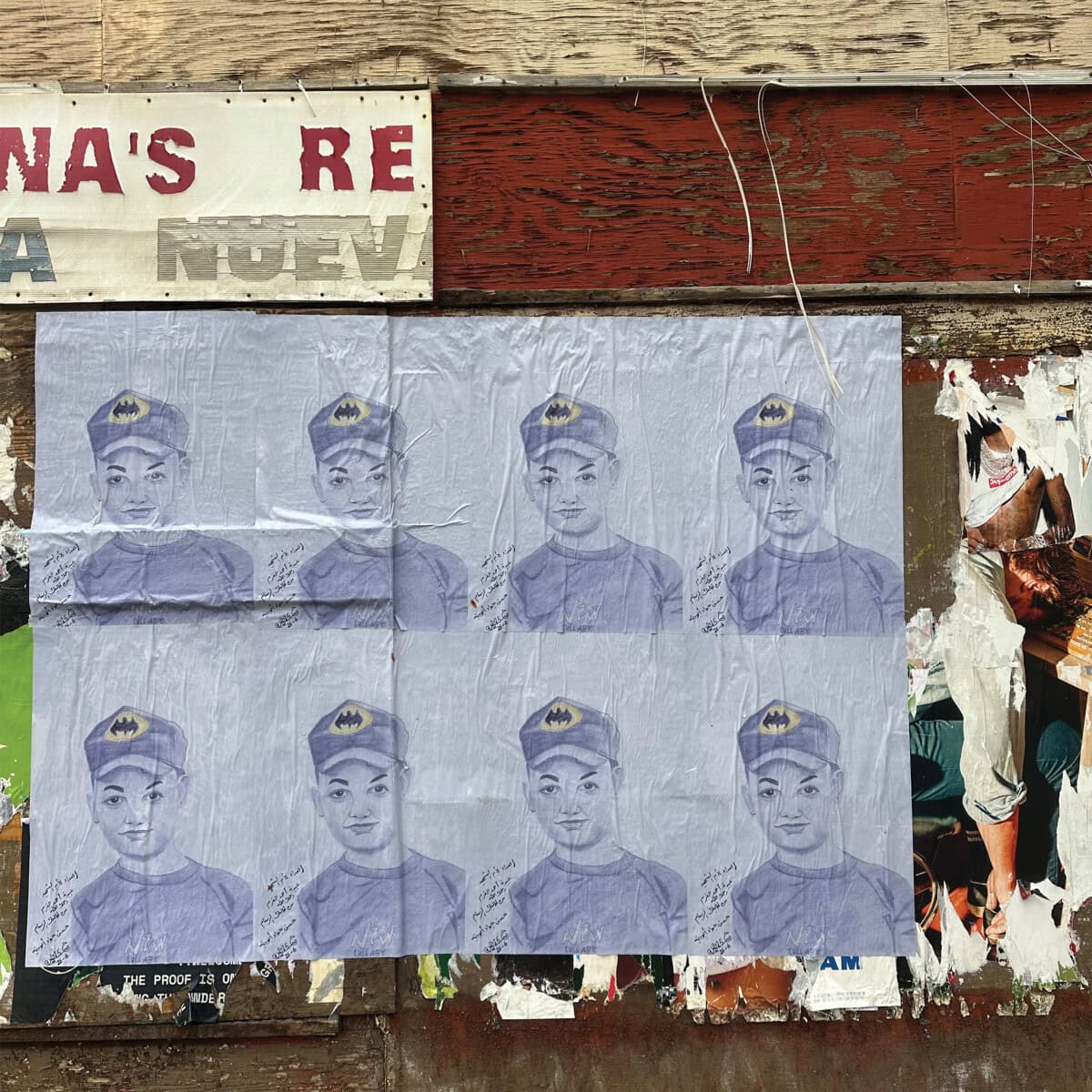
Drawing by Hassan Jawad Abudeia.
Installation and cover photo by Rich Jones.
LIVE DATES
Friday July 24 – Curtas Vila do Conde International Film Festival, Porto, Portugal – tickets
Thursday September 3 – Sound and Gravity Festival, Chicago, US – tickets
Saturday September 26 – Videodroom, Gent, Belgium – tickets
Dear Children of Our Children, I Knew: Epilogue is out May 5, presave it here.
Today, London-based saxophonist, singer, songwriter, activist, orator, and poet-philosopher Alabaster DePlume shares “Glass” — the third and final single streaming now from his upcoming EP of instrumentals, Dear Children of Our Children, I Knew: Epilogue. The EP arrives exclusively on vinyl this Saturday, April 18 as part of Record Store Day (streaming in full from May 5) via International Anthem.
Listen to “Glass” now and pre-save the EP ahead of its full digital release here.
The atmospheric and meditative “Glass” captures a beauty that refuses to be extinguished. Barely pausing for breath, DePlume’s saxophone unfurls with a quiet, relentless insistence, threading over a steady pulse of bass (by Shahzad Ismaily), drums (by Tcheser Holmes), and a trance-like electronic loop.
Of the new single, Alabaster says: “Superheating sand, it melts. It becomes clear, transparent. Hardening, it becomes glass. The glass, we shatter, and it becomes shards. And yet still it manages to shine, in a way. They are transparent. How a human being can endure extremes of brutal punishment, and yet still shine, still be transparent, clear, still refract the light.”
The Record Store Day exclusive vinyl LP, out this Saturday, April 18, also includes DePlume’s 2024 EP Cremisan: Prologue to A Blade previously available digitally only and now released on vinyl for the first time. More info about the Dear Children of Our Children / Cremisan vinyl LP via Record Store Day here.

(Dear Children of Our Children, I Knew: Epilogue art by Hasan Jawad Abudayyeh, installation and photo by Rich Jones)
DePlume recorded Dear Children during the middle of his March 2025 US tour, after weeks of playing shows with Ismaily and Holmes, performing music from his critically acclaimed album A Blade Because A Blade Is Whole (released March 2025). The trio’s onstage rapport was so immediate and strong that, on an off day in Brooklyn, DePlume chose to capture that connection, recording this collection of instrumental pieces shaped by the experience of performing, sharing, and improvising off the music of A Blade for audiences across the US.
Speaking about Dear Children, DePlume says: “Meeting with you all at the shows I sensed that you felt voiceless, on this ethical issue that also spelled out what we’re seeing today, in the form of ICE. That experience with you is etched into me, like graffiti or a poster on the wall. It’s my job to deliver your voice, and that’s what this record is. And to take action. That urgency compelled me to record then. And now here we are. As we said, this world is awakening to the reality it was already living.”
The two EPs contained on the vinyl release serve as bookends (literally a “prologue” and “epilogue”) for A Blade Because A Blade Is Whole; and as with almost everything that DePlume has put forth in recent years, the connection of both works to Palestine is deep. The Cremisan EP itself was recorded in Palestine. Dear Children incorporates field recordings and samples of children playing and of normal life in the West Bank, and its cover art depicts wheatpaste posters of a drawing made by a 13-year-old boy from Gaza (used with permission). The inscription on the cover art says, in Arabic, “Dedicated to the mother of the martyr/witness Obaida Ahmed al-Qiram. May you rest in peace. From your student, the artist, Hasan Jawad Abudayyeh.”
Alabaster DePlume will be performing a live score to the cult film Time of the Heathen in Portugal at the Curtas Vila do Conde International Film Festival and in Gent, Belgium at the 2026 edition of Videodroom during the International Film Festival of Gent. He’ll also be returning to the US to headline the first day of Sound and Gravity festival in Chicago.

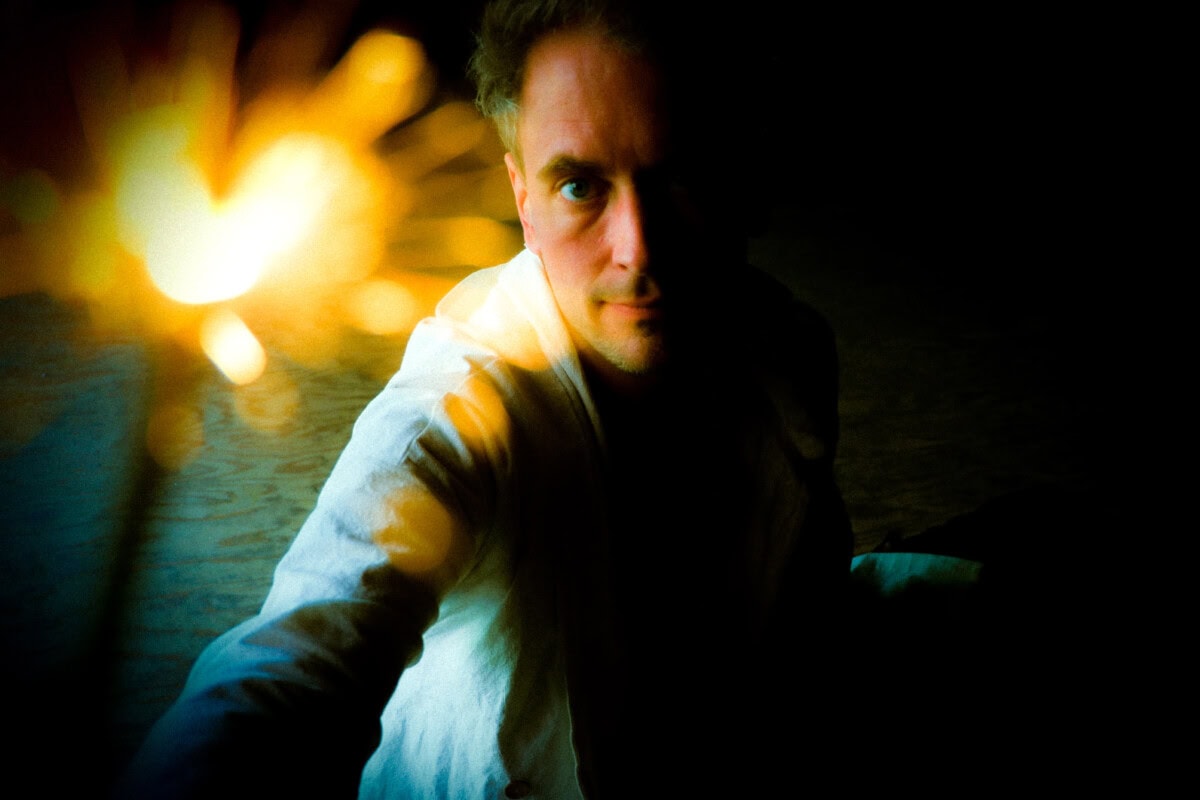
Photo by Alexander Massek
ABOUT ALABASTER DEPLUME
Alabaster DePlume often asks a simple question: what do people need? In his work, at his shows, in his collaborations, the Mancunian singer-saxophonist and poet-philosopher poses this to the people around him. What are people looking for? In recent years, the same reply kept coming up: healing, healing, people need healing. But why, and what does it mean to heal, especially in a world where the very idea is often commodified and sold as a luxury? If people were coming to his music for something so mysterious, he ought to figure it out. Maybe he ought to try some healing himself.
“For a long time, I’ve always tried to give responsibility for my value to someone else,” DePlume said on a recent phone call. It seemed he’d become so caught up in the work of forging connections, and thinking about the effects of his work on others, that he’d lost a sense of himself. “I was working on that,” he explained.
This experiment in healing included slowing down, reading, reflecting, and even taking up the practice of jiu-jitsu. DePlume wrote poetry, too, including the book Looking For My Value: A Prologue to A Blade, seventy pages of verse rooted in its title’s great search, in finding strength of self within a community, alongside meditations on the paradox of the blade. “The blade, that divides, is whole,” he writes in the introduction. “Healing is the forming of a whole, and a whole is singular, more itself, as in more one, as in more alone.” A blade could be used to attack, to shave, to sever, but it could also be used to cut oneself loose — in the process of getting free.
“What’s the opposite of sleep? It’s trying to sleep,” he says. “And so what’s the opposite of looking for my value? It is knowing my value. It simply is there. My dignity is there. I don’t need anyone else to know my dignity, or me, to know it. I know it first. I can’t seek it from another. I stand for it.”
Selections from the poetry book ultimately became the lyrics across half of the tracks on A Blade Because A Blade Is Whole, DePlume’s latest full-length work: eleven songs of agency and survival and presence; of confronting life’s pains rather than trying to avoid them; of banishing escapism. In sum, it documents his learning of the fact that dignity and self-determination are prerequisites for becoming whole, which is to say, for healing. If a blade were broken it would not serve its purpose; it must be unbroken, it must be whole, to be of use.
In the Alabaster DePlume songbook, the celestial ease of his instrumental tracks can sometimes feel like a trojan horse for a voice that is disarmingly honest about the heaviness of existence.