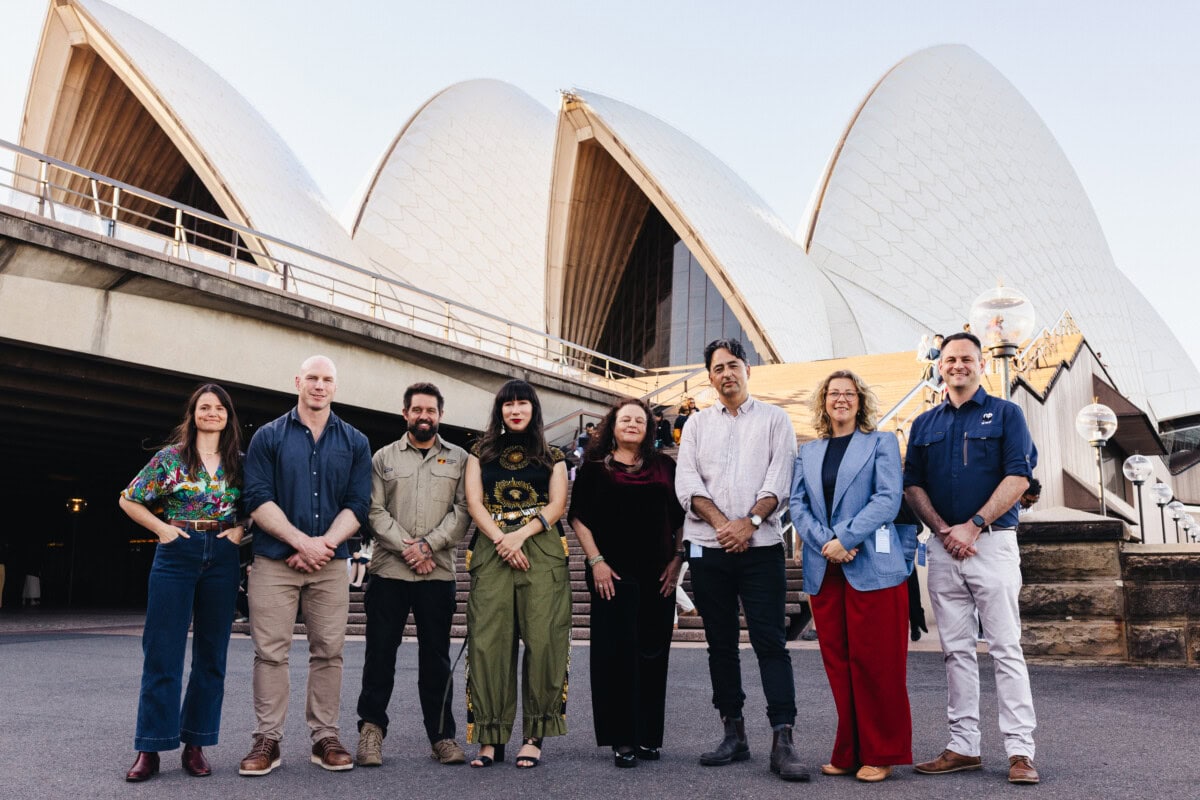
FEAT. Live announce: Aboriginal-led project to return wombats and potoroos to Bass Strait Island
ABOUT THE TASMANIAN ABORIGINAL CENTRE
The Tasmanian Aboriginal Centre is the peak body representing the Tasmanian Aboriginal community and has led land and cultural heritage programs across the state for decades. The TAC represents the political and community development aspirations of the Tasmanian Aboriginal community. It operates statewide services and programs, including a holistic and state-of-the-art health service and allied programs, land and sea management, cultural awareness unit and palawa kani language program.
ABOUT GREENCOLLAR
GreenCollar was founded in 2011 as a conservation-driven profit-for-purpose organisation, and is one of the leading environmental markets project developers and investors in Australia across the carbon, water quality, biodiversity and plastics markets. GreenCollar works with landowners and managers throughout Australia to develop projects that create commercial opportunities by generating environmental credits through caring for the environment. GreenCollar’s management team was fundamental in helping to establish Australia’s carbon market framework, as well as Queensland’s Reef Credit Scheme, and are widely recognised as thought leaders in the carbon and biodiversity markets industry.
ABOUT FEAT.
FEAT. is an artist-led impact agency that mobilises the cultural power of the live entertainment industry towards climate and nature-based outcomes. Founded in 2019 by artist Heidi Lenffer from Cloud Control, FEAT. enables international touring artists to fund high-integrity impact projects off the back of their Australian tours through their Solar Slice ticketing initiative. FEAT.’s impact mandate is science-backed and results-oriented and since launching has overseen over $8.5 million of funding towards clean energy and nature restoration projects in partnership with Australia’s leading festivals and events, artist tours and impact investment.
Wombats, wallabies, and long-nosed potoroos are coming home to Lungtalanana (Clarke Island), an 8,200-hectare island in Bass Strait, in a landmark project led by the Tasmanian Aboriginal Centre (TAC).
The species were once native to the island before being wiped out following European colonisation. Their return marks one of the most ambitious First Nations-led wildlife repatriation efforts in the country, led on the ground by the TAC’s Pakana Rangers using traditional practices such as cultural burning alongside modern conservation science.
Lungtalanana was returned to the Tasmanian Aboriginal people in 2005 and has since become a model for Aboriginal-led land management. This project deepens that work, helping restore not just wildlife but language, culture, and connection to Country on the island.
“In planning the repatriation of culturally significant and ecologically critical species, such as wombats and wallabies, we are creating an extraordinary safe haven for native wildlife,” said Andry Sculthorpe, Land and Heritage Coordinator at the TAC. “This partnership allows us to weave together traditional knowledge, modern science, and innovative market-based solutions to heal Country and support self-determination.”
What makes the project unusual is how it’s being funded. Rather than relying solely on grants or donations, the project is backed by a wave of Australian musicians and festivals through FEAT., the artist-led climate impact agency. Supporters include Massive Attack, Missy Higgins, King Gizzard & The Lizard Wizard, The Wombats, Angie McMahon, Lime Cordiale, Cloud Control, and festivals including St Jerome’s Laneway and Party in the Paddock.
Heidi Lenffer of FEAT., said the artists involved were excited to support Aboriginal self-determination on returned land, as well as measurable biodiversity outcomes. “This is easily one of the most compelling projects that we’ve ever invited our international artist community to back,” said Lenffer. “Not only does the island geography create exceptional conditions for nature restoration outcomes — but at its core this is about supporting the rightful owners, the Palawa community, to restore an island that was taken from them, degraded over centuries of colonial pastoral practices, and is now back under their custodianship forever.”
For Missy Higgins, backing the return of wombats to Lungtalanana is about leaving a better world for the next generation. “I’m pleased to support the restoration of Lungtalanana by the Palawa people and encourage everyone else to lend a hand if they’re able,” said Higgins. “It’s the kind of positive project which should make us all feel just a bit better about the world we’re leaving behind for our kids.”
This partnership was a no-brainer for The Wombats. “When we heard about this project, we really wanted to support it in some way. Hearing how the locals are helping nature and reintroducing some of our namesake, the wombats, to play their part in bringing this fragile ecosystem back to life is just brilliant. Wishing everyone involved the best of luck making a success of this project, and we really look forward to visiting the island one day and seeing firsthand the beautiful island restored.”
Stu Mackenzie says King Gizzard & The Lizard Wizard wanted their Australian tour to be a force for good: “In a world where it feels like everything you purchase is funding inequality, climate destruction or genocide, King Gizz are stoked to work with FEAT on the Lungtalanana project for our Aussie tour.”
The project will generate its own ongoing income by selling biodiversity credits — a new, outcomes-based form of conservation funding — to buyers, including one of Australia’s leading music festivals, St. Jerome’s Laneway Festival, Bank Australia, Future Group and the Federal Government, who have already contracted to purchase credits from the project. That income is reinvested into on-ground conservation work, helping the project expand over time.
The credits are generated using the NaturePlus® biodiversity credit methodology, developed by GreenCollar, one of Australia’s leading environmental markets project developers. Biodiversity outcomes on the island are measured over time against the original baseline condition, and independently verified by Accounting for Nature®, an environmental accounting body, before credits are issued.
“This is a genuinely new way of funding Aboriginal-led conservation at scale,” said Pierre Josset, Deputy CEO of GreenCollar. “It means the project isn’t dependent on one-off grants — it can keep generating the income it needs to grow, backed by rigorous, independently verified evidence that it’s working.”
The project also has support from the Office of the Threatened Species Commissioner, WWF-Australia, and the University of Tasmania.